LAYER & GLAZE in oils
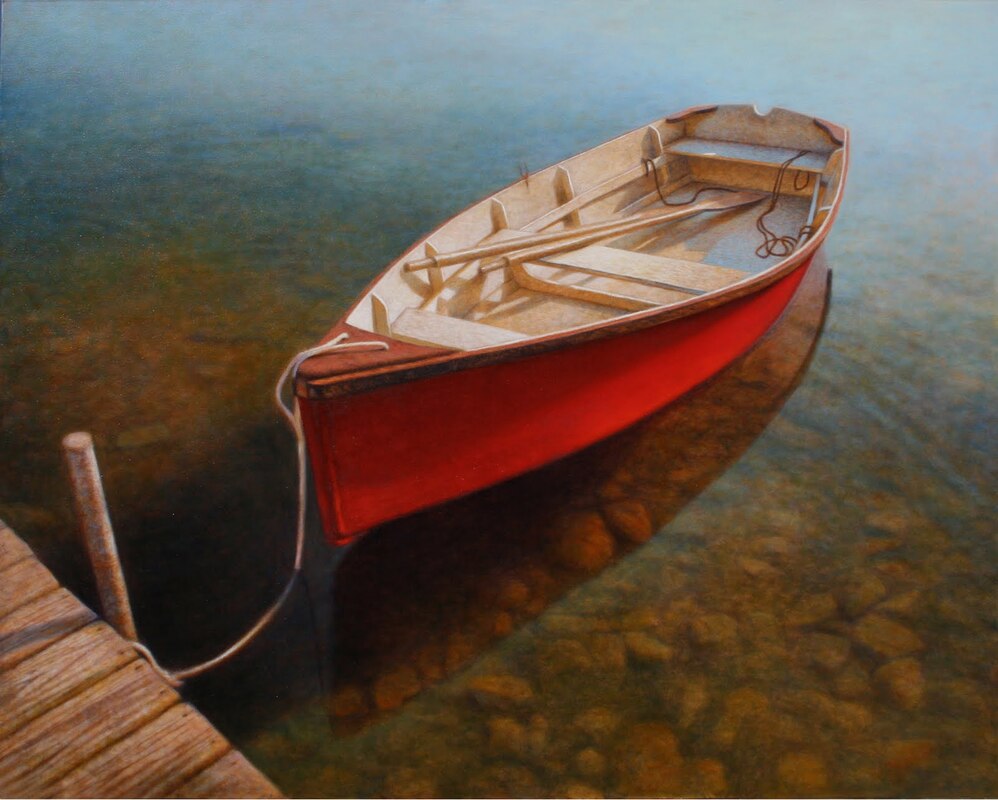
BEGINNERS LAYER & GLAZING (Todd Bonita)
January 8 - March 4, 2024 (9am - 12) 8 Mondays
Community Congregational Church, 44 Post Rd. Greenland, NH. (Parish House)
(Limit 14) $360
This is our Annual, "New Years resolution class"....Mkae this the year you finally jump in and crack the codes to good painting. This indoor class takes place at the Greenland Congregational church, Parish house, Monday mornings and aims to simplify oil painting using a traditional layering process. These classes are for beginners who have never painted before or for those who have some experience but are looking for a simple and focussed understanding of the nuts and bolts of oil painting. Each class begins with a demo, where we will explore individual steps from drawing to underpainting to color application. Design, value, color and creative oil painting techniques and tools will be discussed and demonstrated. With an understanding of these principles, students will be better equipped to meet the challenges of painting with glazes and layers, and thereby, better able to express themselves as artist. Syllabus and supply list below.
*No class Feb 26. Snow date: March 18, 2024.
January 8 - March 4, 2024 (9am - 12) 8 Mondays
Community Congregational Church, 44 Post Rd. Greenland, NH. (Parish House)
(Limit 14) $360
This is our Annual, "New Years resolution class"....Mkae this the year you finally jump in and crack the codes to good painting. This indoor class takes place at the Greenland Congregational church, Parish house, Monday mornings and aims to simplify oil painting using a traditional layering process. These classes are for beginners who have never painted before or for those who have some experience but are looking for a simple and focussed understanding of the nuts and bolts of oil painting. Each class begins with a demo, where we will explore individual steps from drawing to underpainting to color application. Design, value, color and creative oil painting techniques and tools will be discussed and demonstrated. With an understanding of these principles, students will be better equipped to meet the challenges of painting with glazes and layers, and thereby, better able to express themselves as artist. Syllabus and supply list below.
*No class Feb 26. Snow date: March 18, 2024.
REGISTER:
Contact Todd Bonita
Phone: (603) 819-9100
Email: [email protected]
We accept:
* Checks,
* Credit Cards (4% process fee)
* Pay Pal (4% process fee)
* Cash for teachers pet...LOL
* Venmo ; @Todd-Bonita (add 2% for process fee)
If sending a check, please make it out to Todd
Bonita and mail it to:
Todd Bonita
28 McShane Ave
Greenland, NH 03840
Please write "Layer and Glaze" in the memo on the check.
Contact Todd Bonita
Phone: (603) 819-9100
Email: [email protected]
We accept:
* Checks,
* Credit Cards (4% process fee)
* Pay Pal (4% process fee)
* Cash for teachers pet...LOL
* Venmo ; @Todd-Bonita (add 2% for process fee)
If sending a check, please make it out to Todd
Bonita and mail it to:
Todd Bonita
28 McShane Ave
Greenland, NH 03840
Please write "Layer and Glaze" in the memo on the check.
Please bring to first class:
3 photographs (We will use one of them as reference to complete your painting and begin our discussion on design).
SYLLABUS
Day #1 Introduction, Overview, Design.
Day #2 Design, underpainting demonstration
Day #3 Underpaintings
Day #4 Under painting White, Values
Day #5 Finished Underpaintings
Day #6 Local color
Day #7 Color, Atmosphere, Edges, Brushwork
Day #8 Finish Paintings, Critique, Conclusion, Framing
Supply List
(I buy my supplies at Jerrysartarama.com, Dickblick.com, Cheapjoes.com, Utrecht.com)
Please bring a table easel, I have extras if you don't have one.
Pallet
I recommend a wood pallet. I have glass too for one of my boxes...try to avoid paper pallets.
Paint
*(I recommend a minimal palette of a warm and cool version of the three primaries plus white (with maybe a few extras)....A total of 9 colors but I have included some additional (optional colors) if you wish to expand and experiment. Please spend the extra for professional grade paints, be careful not to buy the student grade paints. I use Williamsburg, Winsor & Newton, Gamblin and Utrecht but there are many good options.)
Titanium White
Alkyd White (Important under painting color) Alkyd is quick dry paint. For brands I like Winsor and Newton Griffin Alkyd Titanium White.
Cad Yellow medium
Yellow ochre (Alternatively, After more than twenty years, I replaced my cool yellow with Transparent Earth Yellow and I love it).
Alizeran Crimson Permanent
Cadmium Red Medium
Ultramarine Blue
Cobalt Blue or Cerulean Blue
Raw umber
Ivory Black
Burnt Sienna (Optional)
Sap Green (Optional)
Viridian (Optional)
Painting surface
Canvas, gessoed wood panels, oil primed panels, canvas or linen mounted to panels are all fine.
I use oil primed wood panels...I recommend (8x10”) or (9x12”)....Please dont run to Michaels last minute and get the slick surfaced, gessoed panels they sell...they are aweful and paint slides off of them. Get something with a little tooth to it...just a little though.)
Brushes
*Assortment of bristle brushes (I suggest large, medium and small in three styles: Flats, Rounds and Filberts. I mostly use Robert Simmons Signet series flats #3, #6 and #10)
*Assortment of synthetic flats and or filberts for glazing color.
*Small synthetic rounds for details. (I suggest Winsor and Newton Septre Gold 2 in the 404 series...size 4 and / or size 6)
Other
*Trowel type Pallet knife
*liquin and pallet cup
****Gamsol (Turpentine substitute) with container or medium glass jar (No turps aloud in studio, sorry, please use Gamsol.
*paper towels (Blue shop towels are the best)
Soft pencil, eraser and sketchbook
*Ruler, straight edge or a mahl stick (something to make straight lines with is handy)
*A Veiwfinder: Important! Whether homemade or store bought, it must be adjustable or proportionate to your canvases. Viewcatcher is ideal.
*Ruby Beholder (This is a quilters tool, a simple red piece of plastic used to see values, Amazon.com has them)
*Artist paint box for supplies
*Wet paint carrier. I love the PanelPaks...they are lightweight and convenient or you could use a pizza box.
**(I have extras of everything so please do not stress or panic if you can’t find that tube of yellow, etc…For best deals, shop online at Jerrys Artarama, Dick Blick, Utrecht or Cheap Joes.
Recommended reading
www.toddbonita.com
www.toddbonitagallery.com
3 photographs (We will use one of them as reference to complete your painting and begin our discussion on design).
- One 8x10” or 9x12” canvas or panel.
- Art Supplies (List is below syllabus)
SYLLABUS
Day #1 Introduction, Overview, Design.
- Discussion of oil painting, objective, goals, tools and process
- Design, Drawing and value scales.
- Students work on value scales.
Day #2 Design, underpainting demonstration
- Underpainting demonstration
- Student set up and work on under paintings
Day #3 Underpaintings
- Discuss students work
- Set up and work on Underpainting
Day #4 Under painting White, Values
- Discuss students work
- Underpainting White demonstration
- Set up and work on Underpainting
Day #5 Finished Underpaintings
- Discuss students work
- Set up and work on Underpainting
Day #6 Local color
- Discussion of color Wheel (Hue, Value, Chroma,/ Munselle, Complimentary, Keying, planning color scheme).
- Local color lay-in demonstration
- Set up and work on color lay in.
Day #7 Color, Atmosphere, Edges, Brushwork
- Discussion of color 2 (Mixing, Graying, Atmosphere, Mood, Depth/Distance, warm and cool, relationships).
- Color mixing exercise
- Set up and work on student projects
Day #8 Finish Paintings, Critique, Conclusion, Framing
- Discussion of finishing a painting
- Set up and finish our paintings
- Review of primary fundamentals of oil painting, visual elements, process.
- Critique of personal projects
- Class critique, recommendation for further study and reading (Coffee and treats).
Supply List
(I buy my supplies at Jerrysartarama.com, Dickblick.com, Cheapjoes.com, Utrecht.com)
Please bring a table easel, I have extras if you don't have one.
Pallet
I recommend a wood pallet. I have glass too for one of my boxes...try to avoid paper pallets.
Paint
*(I recommend a minimal palette of a warm and cool version of the three primaries plus white (with maybe a few extras)....A total of 9 colors but I have included some additional (optional colors) if you wish to expand and experiment. Please spend the extra for professional grade paints, be careful not to buy the student grade paints. I use Williamsburg, Winsor & Newton, Gamblin and Utrecht but there are many good options.)
Titanium White
Alkyd White (Important under painting color) Alkyd is quick dry paint. For brands I like Winsor and Newton Griffin Alkyd Titanium White.
Cad Yellow medium
Yellow ochre (Alternatively, After more than twenty years, I replaced my cool yellow with Transparent Earth Yellow and I love it).
Alizeran Crimson Permanent
Cadmium Red Medium
Ultramarine Blue
Cobalt Blue or Cerulean Blue
Raw umber
Ivory Black
Burnt Sienna (Optional)
Sap Green (Optional)
Viridian (Optional)
Painting surface
Canvas, gessoed wood panels, oil primed panels, canvas or linen mounted to panels are all fine.
I use oil primed wood panels...I recommend (8x10”) or (9x12”)....Please dont run to Michaels last minute and get the slick surfaced, gessoed panels they sell...they are aweful and paint slides off of them. Get something with a little tooth to it...just a little though.)
Brushes
*Assortment of bristle brushes (I suggest large, medium and small in three styles: Flats, Rounds and Filberts. I mostly use Robert Simmons Signet series flats #3, #6 and #10)
*Assortment of synthetic flats and or filberts for glazing color.
*Small synthetic rounds for details. (I suggest Winsor and Newton Septre Gold 2 in the 404 series...size 4 and / or size 6)
Other
*Trowel type Pallet knife
*liquin and pallet cup
****Gamsol (Turpentine substitute) with container or medium glass jar (No turps aloud in studio, sorry, please use Gamsol.
*paper towels (Blue shop towels are the best)
Soft pencil, eraser and sketchbook
*Ruler, straight edge or a mahl stick (something to make straight lines with is handy)
*A Veiwfinder: Important! Whether homemade or store bought, it must be adjustable or proportionate to your canvases. Viewcatcher is ideal.
*Ruby Beholder (This is a quilters tool, a simple red piece of plastic used to see values, Amazon.com has them)
*Artist paint box for supplies
*Wet paint carrier. I love the PanelPaks...they are lightweight and convenient or you could use a pizza box.
**(I have extras of everything so please do not stress or panic if you can’t find that tube of yellow, etc…For best deals, shop online at Jerrys Artarama, Dick Blick, Utrecht or Cheap Joes.
Recommended reading
- Art Spirit by Robert Henri
- Alla Prima 2, (Everything I know about painting) by Richard Schmid
- Hawthorn on Painting by Charles Hawthorn
- Drawing on the right side of the brain by Betty Edwards
- Composition of outdoor painting by Edgar Payne
- Carlsons guide to landscape painting by John Carlson
- Landscape Painting: Essential concepts by Mitchell Albala
- Landscape Painting inside and out by Kevin MacPherson
www.toddbonita.com
www.toddbonitagallery.com